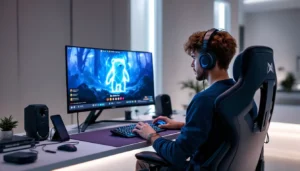

League of Legends keycaps have evolved from niche collectibles into a legitimate way for gamers to express their passion while improving their mechanical keyboard setup. Whether you’re a casual player dabbling in the Summoner’s Rift or a competitive grinder chasing LP, your keyboard is your interface to every command, every flash, every crucial teamfight. The right keycaps don’t just look good, they can enhance your gameplay through better ergonomics, reduce fatigue during long sessions, and frankly, make you feel like a pro when you’re grinding ranked. This guide covers everything you need to know about League of Legends keycaps in 2026: what’s available right now, how to pick the right set for your setup, installation tips, and where serious gamers are actually buying them.
Table of Contents
ToggleKey Takeaways
- League of Legends keycaps combine aesthetics with functional benefits like improved ergonomics and reduced hand fatigue during intense ranked grinding sessions.
- Official Riot Games collaborations with Corsair and Glorious offer the most reliable quality and authenticity, with prices ranging from $50–150 for full sets.
- Cherry MX compatibility is standard for most mechanical keyboards; verify your switch type and keycap profile before purchasing to ensure proper fit.
- Premium PBT keycaps resist shine and maintain texture better than budget alternatives, providing tactile consistency crucial during competitive play.
- Secondary markets like Reddit’s r/Mechmarket offer significant savings on lightly-used or retired League keycap sets, with prices often 30–50% below MSRP.
- Proper installation using a keycap puller and regular maintenance with distilled water can extend keycap lifespan to 3–5 years of daily use.
What Are League of Legends Keycaps?
League of Legends keycaps are custom replacement key covers for mechanical keyboards featuring Champion artwork, Runeterra lore, iconic item symbols, or the League branding. Unlike stock keycaps that ship with most keyboards, these are specifically designed with aesthetics tied to Riot’s universe, think Project skin themes, K/DA aesthetics, Spirit Blossom imagery, or classic champion silhouettes.
They’re not just cosmetic. Quality keycaps can improve your typing feel through different materials (ABS plastic, PBT, resin), profiles (Cherry, OEM, SA, XDA), and textures. Many competitive players swear that switching to aftermarket keycaps, even non-League themed ones, improves their Actions Per Minute (APM) and reduces hand strain during extended grinding sessions.
These keycaps come in full sets (entire keyboard coverage) or partial sets (just the WASD cluster or spacebar). Some sets are officially licensed through Riot Games, while others are created by independent artists who’ve licensed Riot’s IP. You’ll also find fan-made designs that operate in a gray legal area, officially tolerated by Riot but not officially sold through their channels.
The community’s been collecting these since around 2018, but the 2026 market has matured significantly. Production quality has improved, availability is better, and there’s way more variety than just “blue and gold summoner vibes.” You’ve got everything from minimalist LoL-inspired designs to full-blown themed sets tied to specific champions or cosmetic lines.
Why Gamers Love Thematic Keycaps
Mechanical keyboards have become a hobby unto themselves in gaming circles, and keycaps are where personality meets function. League of Legends keycaps tap into something deeper than just “I like this game”, they’re about creating a setup that reflects your identity as a player.
First, there’s the identity factor. If you main Ahri, having Ahri-themed keycaps on your board creates a cohesive aesthetic. It’s the same reason esports pros customize their entire setup around team colors or personal branding. When you’re staring at the same keyboard for 6+ hours a day grinding ranked or watching esports, visual consistency matters psychologically.
Second, quality keycaps actually perform better than budget alternatives. Premium PBT keycaps resist shine (the glossy wear that appears on cheap keycaps after months of use), maintain their texture, and feel smoother under fingers. During high-stress teamfights where precise input is critical, that tactile consistency can reduce micro-adjustments your brain makes unconsciously. Studies on gaming peripherals show that familiarity with your input device reduces reaction time by eliminating mental friction.
Third, there’s the community angle. Custom keycaps are conversation starters at gaming cafés, esports events, and in Discord servers. Other gamers immediately recognize Riot IP or iconic champion designs. It’s a low-stakes way to signal “I’m part of this community” without being obnoxious about it.
Finally, they’re collectible. Limited-edition keycap runs from official Riot collaborations or indie artists often sell out in days. Resale value on rare sets can spike 200-300% above MSRP. While most gamers buy for use, the collectibility adds a satisfaction layer that’s similar to collecting skins or merchandise.
Top League of Legends Keycap Sets to Buy Right Now
Official Riot Games Collaborations
Riot Games officially partners with keycap manufacturers to release licensed sets tied to major events and cosmetic lines. These are your safest bet for quality and authenticity.
Riot x Corsair Collaborations have been the most visible in 2025-2026. Corsair’s mechanical keyboards already ship as gaming peripherals in the Seatreak community, and their keycap quality is industry-standard. Recent drops include:
- K/DA All Out Keycap Set – Features neon and dark aesthetics inspired by the K/DA skin line. Full set with alternate artisan caps. $85-120 USD. Works with Cherry MX-compatible switches.
- PROJECT 2026 Collection – Released early 2026, this set emphasizes futuristic design with holographic elements on select keycaps. Premium resin artisan caps available separately. $120-150 USD.
- Classic Summoner’s Rift Gold & Blue – The official “LoL colors” interpretation. Simpler design, broader appeal, beginner-friendly pricing at $50-70 USD.
You can find official Riot collaborations through Corsair’s official store and authorized retailers. These sets come with documentation proving authenticity and often include extra caps for the spacebar (different profiles for different keyboard layouts).
Riot x Glorious PC Gaming Race also launched in late 2025. Glorious is known for budget-conscious, quality-first approach. Their League sets are priced 20-30% lower than premium alternatives while maintaining solid build quality.
Third-Party Designer Options
Independent designers create some of the most creative League keycap sets, though they operate on smaller runs and can be harder to track down.
Novelkeys has partnered with independent artists on limited League-themed drops. Their artisan keycap quality is exceptional, each cap is hand-crafted or carefully produced in small batches. Expect to pay $200-400 for premium artisan sets, but resale value often justifies the investment.
MechCaps focuses on high-detail resin artisan keycaps featuring champion portraits. Their Arcane-inspired collection (2025) gained massive traction by pulling aesthetics from the Netflix series. These are showpieces, beautiful as fuck to look at, but at $250+ per set, they’re collectible rather than daily drivers for most players.
Keycap Kingdom runs quarterly drops with community-voted designs. Their advantage is direct communication with the LoL community. If you vote for a design, you’re actually influencing what gets produced. Sets run $80-140 and tend toward bold, recognizable Champion art.
Budget-Friendly Alternatives
Not everyone has $150+ to drop on keycaps. There are decent budget options.
Drop (formerly Massdrop) regularly stocks affordable League-inspired keycaps. Their Dracula and Nord colorway sets aren’t officially LoL branded but match the aesthetic perfectly (dark purples and silvers, icy blues). $40-60 USD. Quality isn’t premium but solid for the price.
AliExpress sellers offer replica and inspired designs dirt cheap, $15-35. The catch: quality control is inconsistent, shipping takes 4-8 weeks, and some designs legally skirt IP boundaries. Most gamers avoid these unless they’re just experimenting with the hobby.
Amazon third-party sellers stock generic “gaming” keycaps with blue/gold colorways that read like League aesthetics without using official artwork. Not authentic, but functional and $20-40. TechRadar’s hardware reviews occasionally feature these budget sets as starter options.
Pro tip: If you’re serious about League keycaps, follow r/Mechmarket and r/leagueoflegends on Reddit. Community members regularly sell unused or lightly-used sets at 30-50% below MSRP. This is where experienced gamers source their keycaps.
How to Choose the Right League of Legends Keycaps for Your Setup
Compatibility and Keyboard Switch Types
Here’s where most newcomers mess up: not all keycaps fit all keyboards.
The vast majority of mechanical keyboards use Cherry MX-compatible switches (or clones like Gateron, Outemu, etc.). If your keyboard uses Cherry MX switches, you’re golden, 99% of aftermarket keycaps work. But some gaming keyboards use proprietary switch types.
Corsair K95/K100 keyboards use Corsair K100 switches, which have a different stem size. Official Corsair keycap sets account for this, but third-party sets won’t fit unless specifically labeled compatible.
Razer Huntsman keyboards use Razer switches, similar limitation.
SteelSeries Apex keyboards typically use SteelSeries QX2 switches, again, proprietary.
Before buying any League keycap set, check your keyboard’s manual or the manufacturer’s website to confirm your switch type. The product listing should specify compatibility. Most quality sets explicitly state “Cherry MX compatible” or list all compatible switch types.
Second consideration: keycap profile. This affects the curve and angle of the keys.
- Cherry profile – Slightly sculpted, medium height, most similar to stock keyboards. Safe choice if you’re unsure.
- OEM profile – Slightly taller, more aggressive sculpt. Popular with enthusiasts but takes adjustment if you’re coming from stock.
- SA profile – Very tall, spherical shape. Aesthetically stunning but dramatically changes typing feel. Not recommended for competitive play if you’re not used to it.
- XDA profile – Flat, uniform height across the board. Minimalist look, faster switch access (useful for ADS in FPS games, though less relevant in LoL).
For League specifically, Cherry or OEM profile is standard. Most official Riot collaborations use Cherry or OEM.
Aesthetic and Gaming Performance Considerations
Beyond mechanics, think about visual and functional fit.
Color scheme matching: If your monitor, mouse, mousepad, and desk setup already have a color theme (RGB lighting, team colors, specific aesthetics), your keycaps should either complement or intentionally contrast. Clashing aesthetics create visual noise that, over time, increases eye fatigue during long sessions. Research from PCMag’s peripheral reviews consistently shows that unified aesthetic setups reduce strain.
Legends legibility: Not all keycap sets have clear, readable legends (the letters/symbols printed on caps). Some artistic sets prioritize aesthetics over function. If you regularly play games that require quick key lookups (less relevant in LoL than in MMOs, but still matters), make sure legends are clear and high-contrast against the cap color.
Texture preference: Do you like smooth keycaps or textured ones? Textured caps (often with a sandblasted or slightly rough finish) provide better grip, especially during intense ranked sessions where your hands might sweat. Smooth resin artisan caps look incredible but can be slippery under pressure.
Artisan vs. standard: Full sets have every key covered. Artisan “add-ons” are individual showcase keys (often the spacebar or escape key) with premium sculpting and artwork. These are optional but can elevate your setup’s visual impact without the full investment. Expect $25-80 per artisan cap.
Practical note: If you’re a competitive player grinding ranked, prioritize consistency and familiarity over aesthetics. Switching keycap profiles or textures mid-season can mess with your muscle memory. Casual players can experiment freely: ladder climbers should test extensively before committing.
Installation and Care Tips for Longevity
Installing keycaps is straightforward once you understand the mechanics, but there are tricks to avoid damage and ensure longevity.
Installation basics:
- Remove old keycaps – Use a keycap puller (usually included in quality keycap sets, or buy one for $5-10). Never pry with screwdrivers or pull straight up. Wiggle gently while lifting. Pulling too hard can pop stabilizers or bend stems.
- Clean the keyboard – Before installing new caps, use compressed air or a small brush to clear dust and debris from the switches. This prevents particles from getting trapped under keycaps.
- Install replacement caps – Align the stem (small pole on the keycap’s underside) with the switch stem. Press down firmly until you hear a click. The keycap should sit flush, not tilted.
- Test stabilized keys – Your spacebar, shift, and enter keys likely use stabilizers (small mechanisms that keep larger caps level). Install these last and ensure they’re smooth before finalizing.
Care and maintenance:
Quality keycaps last 3-5 years of daily use before significant wear. You can extend this:
- Avoid excessive heat/moisture – Don’t leave your keyboard in direct sunlight or humid environments. Resin artisan keycaps can warp or discolor under heat.
- Clean regularly – Use a microfiber cloth to wipe down keycaps monthly. Stubborn residue can be cleaned with a slightly damp cloth (don’t soak). For premium caps, use distilled water only.
- Minimize key clusters – The WASD cluster gets 10x more wear than other keys since those are your movement keys in every game. If you’re grinding hardcore, consider rotating caps or using protective overlays.
- Store extras carefully – If you have alternate colorways or artisans, store them in dust-free containers away from heat and humidity. Some collectors use silica packets to control moisture.
- Don’t use harsh chemicals – Avoid bleach, acetone, or aggressive solvents. These can damage the finish, especially on painted or resin caps.
Troubleshooting common issues:
- Caps feel loose or wobbly – Your switch stem might be slightly damaged. Try a different keycap on that switch. If the switch is the problem, the switch likely needs replacement (not a keycap issue).
- Stabilizers rattle – Usually means the stabilizer bar isn’t fully seated. Gently remove the keycap and reseat the stabilizer.
- Legends wearing off – This happens on cheap printed legends. Premium sets use double-shot or dye-sub legends that resist wear. If it happens quickly, you may have purchased a lower-quality set.
Proper installation and care mean your League keycap set will outlast your keyboard. Most gamers upgrade keyboards every 2-3 years but keep their favorite keycaps.
Where to Buy League of Legends Keycaps
Finding authentic, quality League of Legends keycaps requires knowing where to look. The market has consolidated around a few reliable sources.
Official and Authorized Retailers:
Corsair’s official website and Amazon storefront are your safest bets for official Riot collaborations. Stock can be limited, especially for limited-edition drops, but authenticity is guaranteed. Corsair often releases exclusive colorways through their newsletter, so sign up if you want early access to new League sets.
Riot Games’ official merchandise store sometimes stocks keycaps directly, though availability varies. Check their store quarterly for official releases.
Specialty Mechanical Keyboard Retailers:
Shops like Keychron, Drop, and Glorious PC Gaming Race maintain curated keycap sections. These retailers handle authenticity verification and offer return policies. Drop specifically runs group buys where you vote on designs before production, this is how many community-driven League sets get made.
Secondary Markets:
The mechanical keyboard community relies heavily on Reddit’s r/Mechmarket and Discord servers dedicated to keycap trading. Prices here fluctuate based on rarity. Out-of-stock or retired sets can go 2-3x MSRP. This is also where you’ll find best deals on used, lightly-used, or “new old stock” keycaps from previous seasons.
TechRadar occasionally reviews keycap retailers and has recommendations for regional availability outside the US. If you’re in Europe or Asia, local retailers often have better shipping times than ordering from the US.
What to avoid:
Unverified sellers on AliExpress or Wish might offer League keycap sets at suspiciously low prices. These are usually counterfeit or quality-control failures from legitimate manufacturers. Counterfeits have dull legends, cheap plastic, and often include trademarked Riot imagery without authorization. Support the community by buying from legitimate sources.
Microsoft, Amazon third-party sellers with no reviews, or newly-created eBay accounts selling keycaps should be treated with skepticism. Check seller ratings and return policies before committing.
International considerations:
If you’re outside the US, shipping costs for keycaps can be brutal. Some retailers like Glorious offer worldwide shipping with flat rates. European buyers should check if there are EU warehouses to avoid import taxes and slow shipping. RTINGS’ international affiliate network sometimes carries gaming peripherals including keycaps with local inventory.
Community Favorites and Player Recommendations
What’s actually getting bought and used in the League community right now? Data from keyboard forums, r/leagueoflegends, and esports gear discussions reveals clear winners.
Most-owned official set: The K/DA All Out keycaps remain the bestseller. Broad appeal (K/DA is iconic), high production quality, and reasonable pricing ($85-120) mean casual and competitive players alike grab these. The neon-on-dark aesthetic photographs beautifully, which drives social media buzz and community visibility.
Best competitive choice: Interestingly, serious ladder grinders often choose minimalist, non-LoL branded keycaps like Nord or Dracula colorways. Why? Because during ranked grind sessions, visual clarity matters more than theme. These sets prioritize high-contrast legends and neutral aesthetics that reduce eye strain during 8-hour streaming sessions. If you watch esports pros’ setups, many use minimal keycap designs even though they’re sponsored by LoL teams.
Most creative set: Keycap Kingdom’s community vote series regularly wins “best design” discussions. Recent champion: an Arcane-inspired set that pulled directly from the Netflix aesthetic rather than LoL’s official art style. This approach appeals to players who like the universe but want something that stands out from “standard LoL” aesthetics.
Best artisan option: Novelkeys’ hand-painted champion portrait caps (limited runs, $200+) consistently get hyped when restocked. These are 100% collectible, most buyers don’t use them daily, they display them or use a single artisan as a spacebar accent.
Community sentiment: Based on r/Mechmarket activity and Discord discussions, players are split between two camps:
- Collectors/Enthusiasts – Will drop $200+ for premium sets, hunt for retired designs, and treat keycaps as investment pieces. This group follows keycap news like esports fans follow patch notes.
- Pragmatists – Buy one quality set ($60-100) and stick with it. They care about function over flex. These players are less visible online but represent the majority of keycap buyers.
If you’re asking “what should I buy?” in a gaming forum, you’ll get vastly different answers depending on who responds. Budget under $100 and go for official Riot collaborations if you want consensus recommendations. Budget more and get artisans if you value uniqueness and collectibility.
Customizing Your Gaming Setup Beyond Keycaps
Keycaps are the gateway drug to keyboard customization, but once you’re in the hobby, there’s a whole ecosystem worth exploring.
Stabilizers: Most stock keyboards use mediocre stabilizers that rattle and feel mushy. Upgrading to Durock or Gateron stabilizers ($20-50 for a full set) is the second most impactful upgrade after keycaps. Better stabilizers = smoother spacebar, fewer rattles, more satisfying typing feel.
Switch swapping: If your keyboard supports hot-swap switches (many modern gaming keyboards do), you can experiment with different switch types. Linear switches (like Gateron Reds) are smooth and fast, good for competitive play. Tactile switches (like Holy Pandas) have a bump that some players find more satisfying. This is where Seatreak’s League of Legends strategies guide becomes relevant, your gear affects your execution consistency.
Keycap layering: Some enthusiasts use multiple keycap profiles or colorways depending on the game. Using WASD cluster in a contrasting color makes movement keys instantly identifiable and can subtly improve reaction times. Not necessary, but a fun psychological edge.
Artisan spacebar: Your spacebar sees constant use, so upgrading it to a premium artisan (custom-sculpted) keycap is practical and aesthetic. Many League-themed artisans specifically make spacebars, combining function with visual impact.
Cable and keycap paracord: Custom keyboard cables ($30-60) and matching keycap aesthetics tie your entire setup together. If your keycaps are K/DA neon, a matching neon cable creates cohesion. Functionally irrelevant, but psychologically satisfying.
Macro pads and side mods: Some competitive players add macro pads (small keyboards with programmable keys) next to their main board for quick ability rotations or summoner spell binding. This requires significant customization but can genuinely improve performance if you have slow hands or high APM demands.
The broader point: once you’re investing in keycaps, the domino effect is real. You’ll notice your mouse pad next, then your monitor stand, then your desk setup. Seatreak’s League of Legends tips cover mechanical gameplay, but hardware optimization is often the missing link for players stuck grinding.
Conclusion
League of Legends keycaps have matured from novelty collectibles into a legitimate hardware category with quality options at every price point. Whether you’re dropping $50 on a budget set from Drop or $300 on premium artisans, the market has something for every player and budget.
The practical takeaway: prioritize compatibility (Cherry MX switches are standard), then quality (PBT or dye-sub legends), then aesthetics. Start with official Riot collaborations if you’re unsure, Corsair and Glorious have proven track records. Explore third-party options and secondary markets once you understand what you want.
Your keyboard is your interface to Summoner’s Rift. Upgrading your keycaps won’t suddenly make you a better player, but a setup that feels right, looks right, and performs consistently? That’s worth the investment. The competitive edge might be small, but it’s real, and at minimum, you’ll enjoy grinding ranked significantly more when your hands feel comfortable and your setup looks like it belongs in a highlight reel.
Start with one quality set, learn installation and maintenance, then explore the hobby deeper if it hooks you. The keycap rabbit hole is deep, but gamers at every level find value in it.